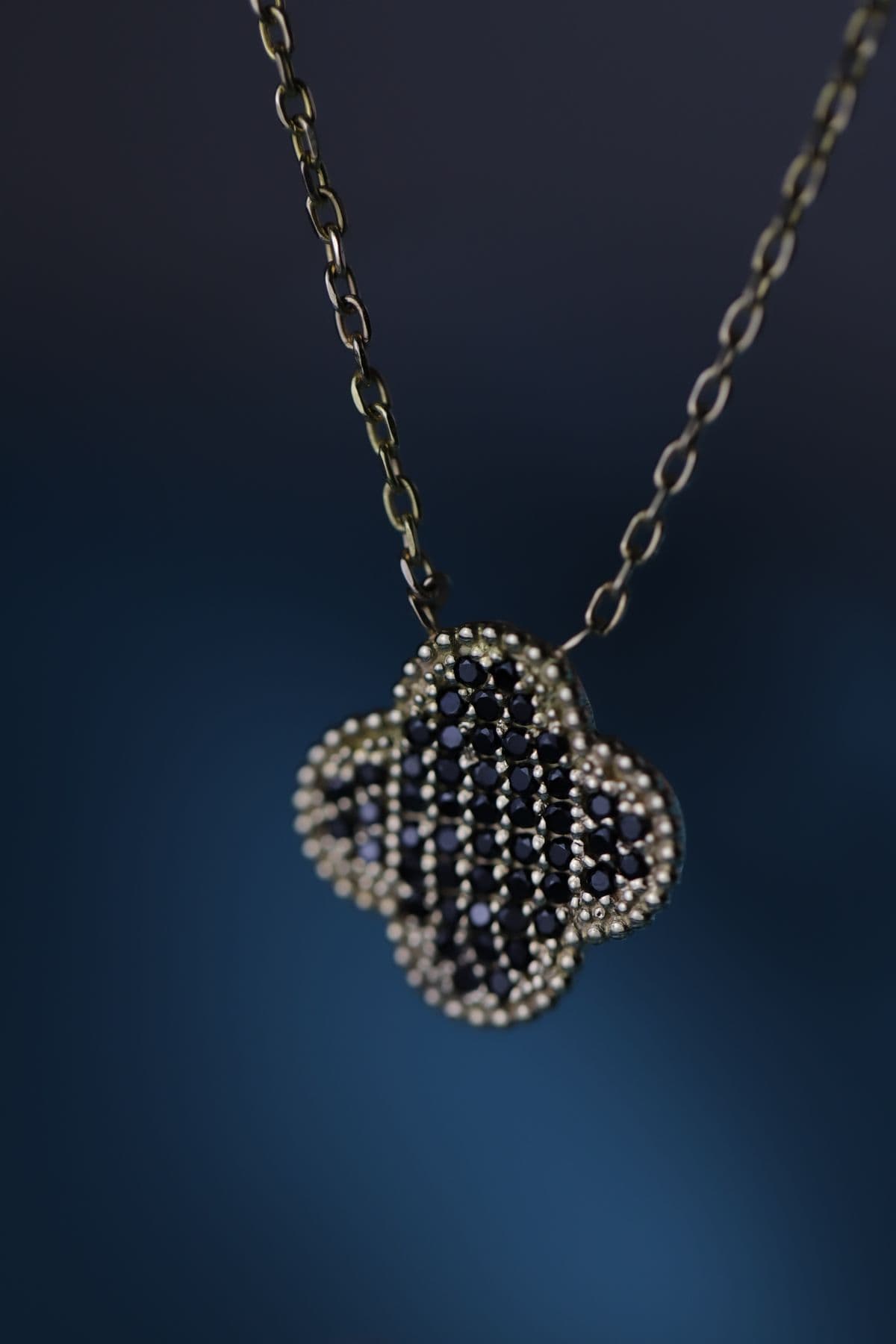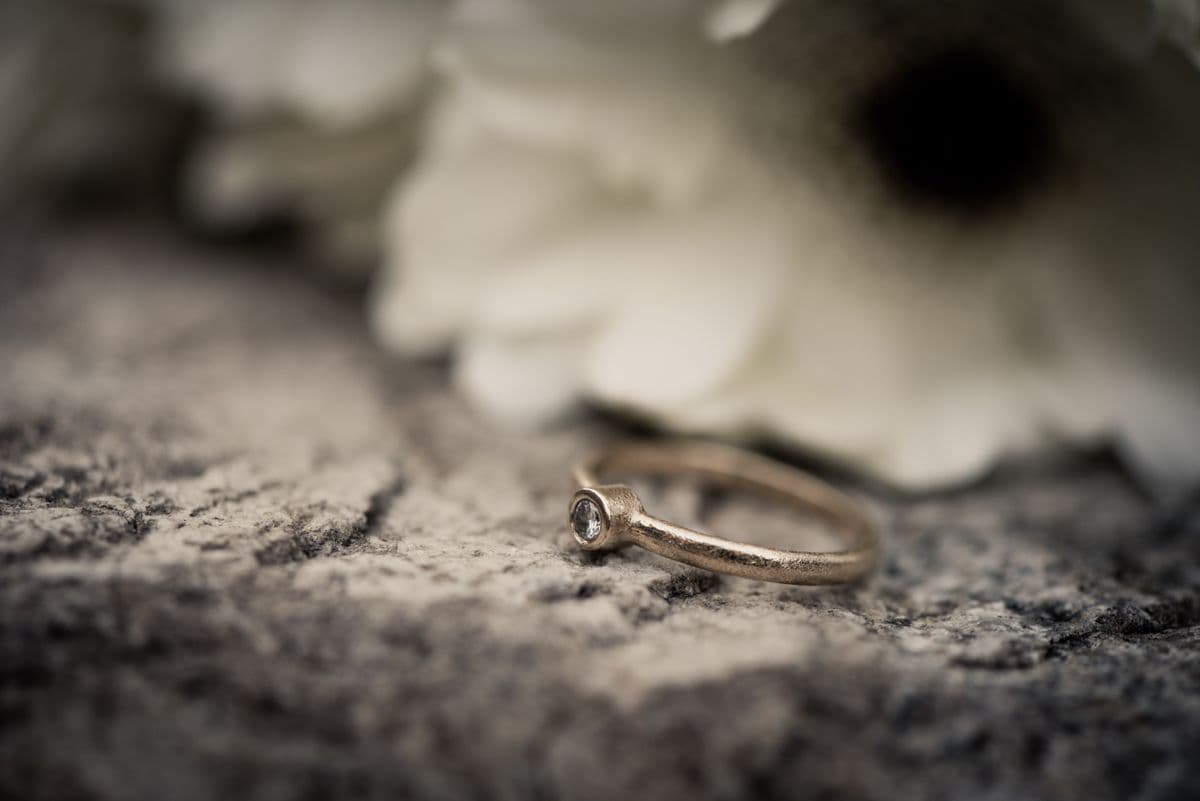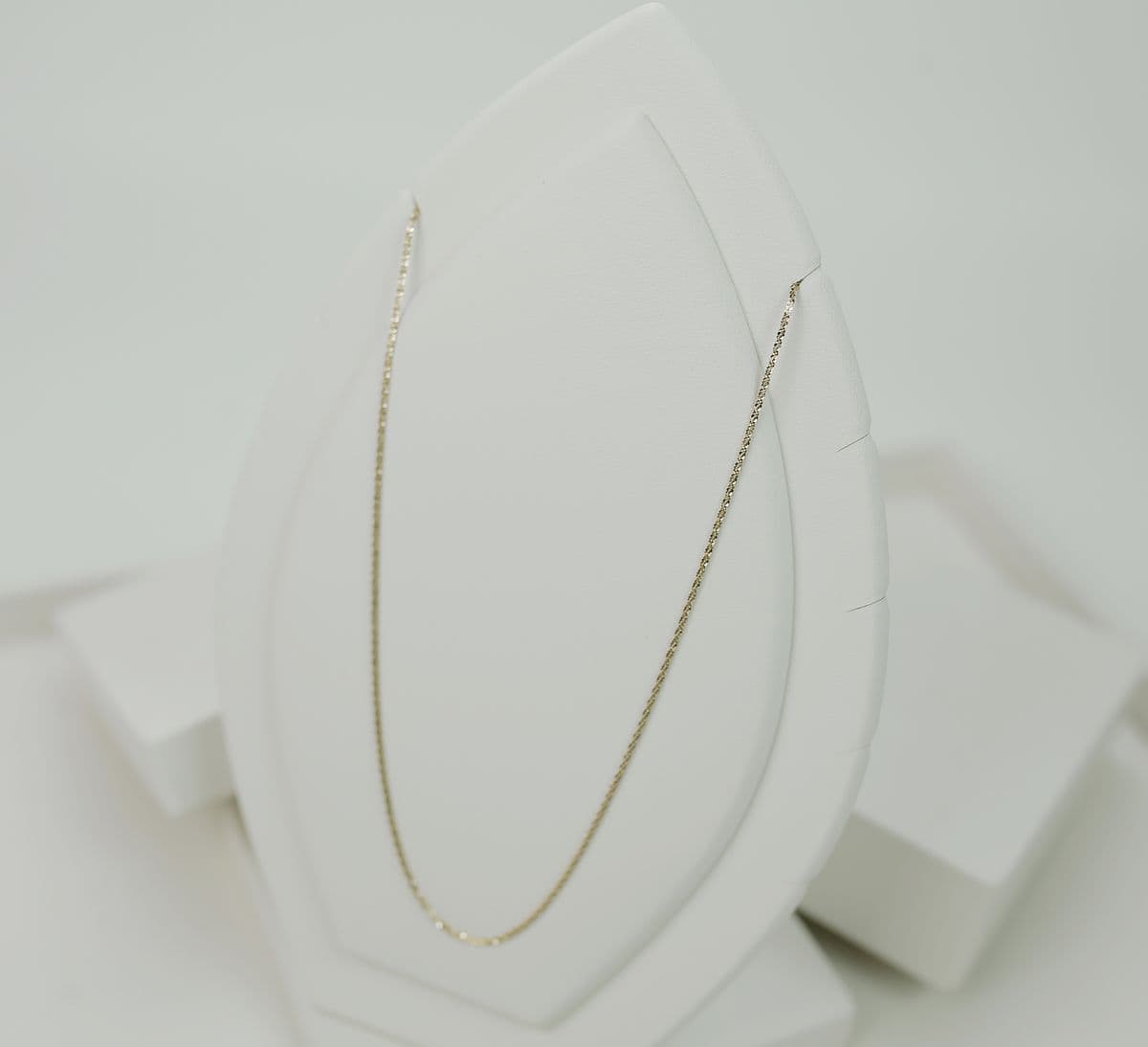
A good stack should look as if it grew with you. The secret is not perfect symmetry; it is a quiet rhythm between different lengths, weights, and memories.
01
Begin with the piece that matters most
Choose one anchor: a pendant you rarely remove, a chain inherited from family, or the piece you want to notice first. Everything else should support it rather than compete with it.
For necklaces, place the anchor near the collarbone or at the lowest point of the stack. For rings, give it the strongest finger or the clearest silhouette.
Leave one thing unresolved. That is often what makes a stack feel personal.
02
Change one quality at a time
Vary length before adding more volume. Then introduce a second texture: a fine trace chain beside a paperclip link, or a smooth band next to a hand-finished surface. Two or three distinct qualities usually feel richer than several near-identical pieces.
Mixing metals can work beautifully when one tone repeats at least twice. A small gold detail echoed elsewhere makes the contrast feel intentional.
03
Keep space in the composition
Jewelry needs breathing room. Leave a visible interval between necklace lengths and avoid filling every finger or wrist. The open spaces give each piece its own outline.
Check the stack while moving, not only in a mirror. Sit, turn, and lift your hands. If chains knot or rings press together, edit one piece out. Comfort is part of the composition.